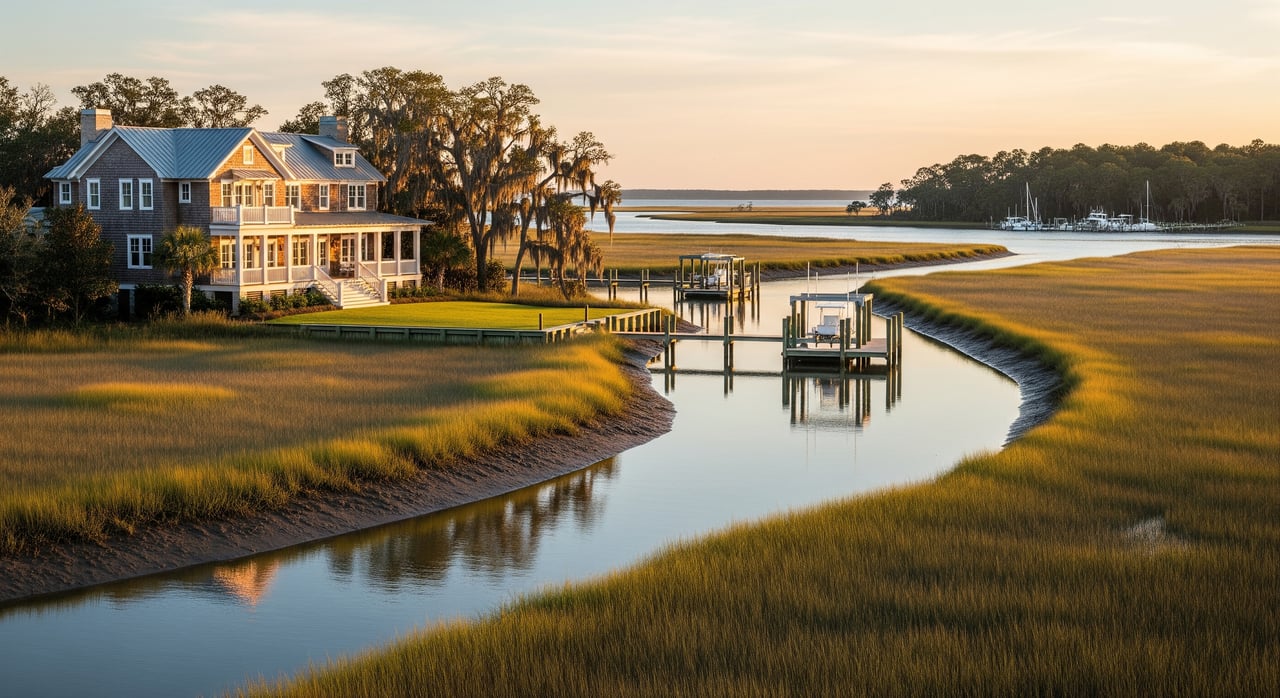
Trying to choose between a marshfront view and true deepwater access on St. Simons? You are not alone. Both offer a classic Golden Isles lifestyle, but they live very differently day to day. The right pick comes down to how you boat, what you want to see out your back window, and how you feel about docks, tides, and permits.
In this guide, you will learn what these terms mean locally, how boating access really works, what to expect with docks and permits, and which choice fits your lifestyle and budget. You will also get a practical checklist to use when touring homes. Let’s dive in.
Marshfront vs deepwater: local meaning
Marshfront on St. Simons
Marshfront property borders tidal salt marshes, tidal creeks, or marsh flats. You often get narrow frontage on a creek rather than a broad, always-navigable channel. Depths change with the tide. At low tide, some creeks can become very shallow or even show mud. This setting is ideal for kayaks, paddleboards, and shallow-draft skiffs. You get a direct connection to wildlife and the marsh landscape, but you may not have year-round motorboat access from your backyard.
True deepwater on St. Simons
Deepwater means reliable, navigable depth at your dock in most tide conditions. On St. Simons, that usually means frontage on the Intracoastal Waterway, a protected channel, or a marked tidal channel that maintains depth at low tide. Deepwater docks are built for larger boats and often include lifts. You plan fewer outings around tides and can keep bigger vessels on site.
Note that deepwater is a relative, market term. Always verify the actual water depth at mean low tide and how the tide behaves right at the property. Ask about dredging history and any lift limits.
Boating access and daily use
Typical boats and activities
- Marshfront: kayaks, paddleboards, johnboats, shallow-draft skiffs, and flats boats. Great for inshore fishing and quiet paddling.
- Deepwater: center consoles, sportfishers, cabin cruisers, and boats with deeper drafts. Better for routine offshore days and flexible schedules.
Getting to the ICW or ocean
Deepwater properties often offer direct or quick access to the Intracoastal Waterway or a marked channel. That means predictable run times and less tide watching. Marshfront owners may navigate winding creeks to reach deeper water, or they may trailer and launch at a public ramp. Some marshfront homes do connect to navigable creeks that reach the ICW, but those routes can be narrow and shallow at low tide.
Tides and scheduling
The Georgia coast is strongly tidal. Marsh creeks are especially tide-dependent. At low tide, channels can be tight for motorized craft. Deepwater docks still experience tidal swing for design and boat lift settings, but the tide is less likely to cancel a planned outing.
Docks, permits, and timelines
Common dock setups
- Fixed pier with pilings: common where depths and substrate support a stable structure.
- Floating dock with pilings: useful where tidal range is significant.
- Long access ramps and side fingers: help reach the deeper thread of a channel off a marshfront lot.
- Boat lifts and davits: common on deepwater docks to keep vessels out of the water and reduce growth.
Who permits docks and why it matters
In Georgia, private shoreline work involves state, federal, and local review. Expect to work with the Georgia Department of Natural Resources’ Coastal Resources Division for marsh and shore permits. Learn more at the Georgia DNR Coastal Resources Division. Work in navigable waters or any dredging may also require approvals from the U.S. Army Corps of Engineers Savannah District Regulatory program. Local building and zoning permits through Glynn County are also part of the process.
Typical constraints include setbacks from the marsh edge, limits on dock length and platform size, and protections to prevent habitat loss. If a dock must cross wetlands or impact sensitive areas, special conditions or mitigation may apply. Owning shoreline does not automatically grant the right to modify submerged lands.
Can you dredge a private channel?
Private dredging is highly regulated and often limited. It usually requires strong justification and layered approvals. Ongoing maintenance dredging is not guaranteed. Do not assume a marshfront lot can be dredged to create deepwater access. Start early with questions and be ready for a detailed review.
Costs and maintenance to expect
Dock costs vary based on length to reach navigable water, piling depth and type, lift size, platform design, and contractor mobilization. Marshfront docks can be shorter, but soft sediments and long access ramps may increase complexity. Deepwater docks can require longer runs over open water and taller pilings, which often raises costs.
Maintenance is part of coastal life. Saltwater corrodes hardware. Marine borers attack untreated wood. Lifts and mechanical systems need annual attention. Tropical storms can require inspections and repairs. If a site has an approved dredge history, factor ongoing maintenance and the chance that future approvals may change.
Environmental, flood, and risk checks
Marsh ecology and shoreline value
St. Simons’ salt marshes are productive nursery habitats for fish and shellfish and support diverse bird life. State policies prioritize minimizing impacts to these resources. For background on marsh function and stewardship, explore Georgia Sea Grant.
Flood zones and insurance
Many coastal parcels sit in FEMA flood zones. Ask for an elevation certificate and review the latest flood map for the property. This affects design choices and insurance costs. The FEMA Flood Map Service Center is the primary source for official panels and determinations.
Tides and water levels over time
Tides affect daily boating and long-term shoreline planning. Review local tidal datums and ranges for the area using NOAA Tides and Currents. Plan docks and lifts for typical low tides and seasonal swings. Over decades, sea-level rise and marsh migration can change shoreline positions. Marshfront lots may see shifts in marsh extent over time.
Rights, easements, and HOAs
Riparian rights vary by location. Confirm what is already permitted, whether there are recorded easements, and if a shared or community dock governs use. Ask for copies of all permits and any HOA rules related to docks or shoreline projects.
Which one fits your lifestyle
Choose marshfront if you want
- Quiet nature views and direct contact with the marsh.
- Paddling, birding, and inshore fishing by skiff.
- A second home with scenic vistas and lower-intensity boating.
- Flexibility to trailer a larger boat or keep it at a marina.
Choose deepwater if you want
- Reliable, year-round access for larger powerboats.
- A lift at your dock to avoid trailering.
- Quick runs to the ICW and easier offshore days.
- A waterfront lifestyle centered on boating and entertaining.
Buyer checklist for offers and inspections
Use this list during due diligence. Ask for documents in writing and keep them with your contract file.
- Recorded water depth at mean low tide beside the dock. Request recent depth soundings or a survey if available.
- Copies of state permits from the Georgia DNR Coastal Resources Division, and any federal approvals from the USACE Savannah District Regulatory program, plus county building permits.
- Any dredging history and maintenance agreements.
- HOA or shared dock agreements and any recorded easements.
- Elevation certificate and the current FEMA flood map panel for the lot from the FEMA Flood Map Service Center.
- Dock and shoreline repair history after past storms.
- Utility access notes and any septic or sewer considerations for waterfront construction.
- Insurance history, including any coastal policy requirements.
- Typical run times from the dock to the ICW and nearest public ramps if you plan to trailer.
The bottom line for St. Simons buyers
On St. Simons, marshfront and deepwater both deliver a true coastal experience. Marshfront leans into privacy, wildlife, and calm-water recreation. Deepwater focuses on dependable boating and convenience. If you plan to run a larger boat often and want to keep it on your lift, deepwater is worth the premium. If you value quiet views and light boating, marshfront can be a perfect fit.
If you are weighing trade-offs, local knowledge makes all the difference. Permits, depths, and tides vary from creek to creek and from one channel bend to the next. When you are ready to explore the best fit for your lifestyle, reach out to Mackay Cate for a tailored, on-the-water game plan.
FAQs
Can I dredge a private channel from a marshfront lot on St. Simons?
- Possibly, but dredging is highly regulated and not guaranteed. State and federal approvals are usually required, and mitigation conditions can apply.
Are marshfront docks always cheaper than deepwater docks?
- Not always. Cost depends on length to navigable water, piling needs in soft sediments, lift size, and design. Shorter runs can save money, but site conditions drive the budget.
How does deepwater access affect resale value on St. Simons?
- Deepwater often commands a premium and broad appeal for avid boaters. Marshfront also holds strong demand among buyers who value privacy, views, and nature.
Which permits should I see before I make an offer on a waterfront home?
- Ask for Georgia DNR Coastal Resources Division permits, any U.S. Army Corps of Engineers approvals if applicable, and county building or shoreline permits, plus as-built dock plans.
Do tides on the Georgia coast limit everyday boating?
- Marsh creeks are tide dependent and can be shallow at low tide. Deepwater docks still feel tidal swing, but they less often restrict your ability to get on the water.